Chapter 1: The Real Role of a PCB Unloader
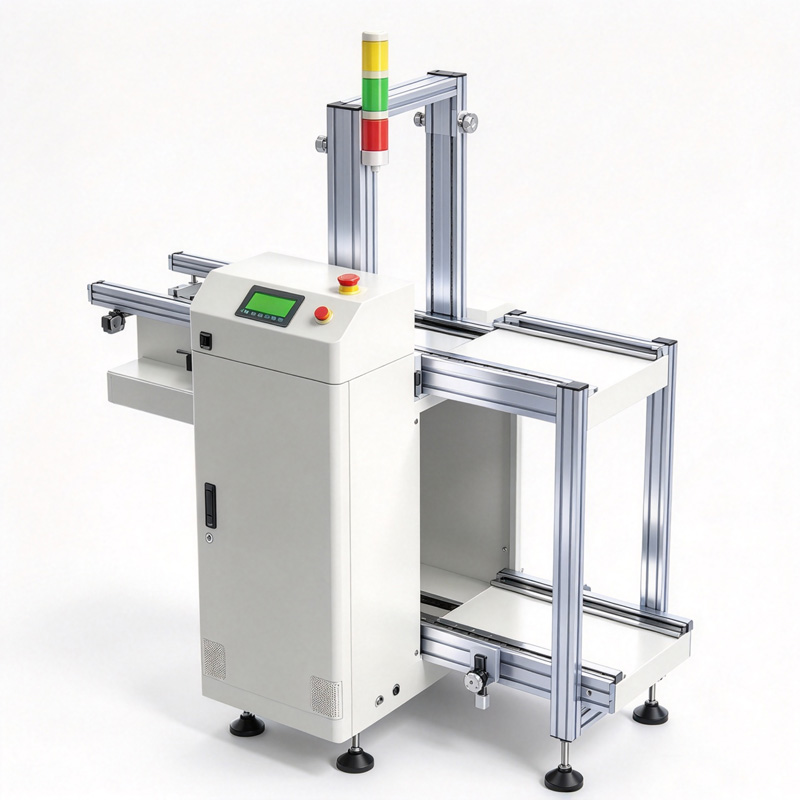
In an SMT production line, the PCB unloader is usually installed at the end of a process. Because it does not place components or perform soldering, its importance is sometimes underestimated. In practice, it is a key connection point between one manufacturing stage and the next.
After passing through reflow, AOI, testing, or another production process, each PCB must be transferred safely and consistently. An automatic PCB unloader receives the board from the conveyor and places it into a magazine, rack, tray, or other carrier. This prevents completed boards from accumulating at the end of the line and allows upstream equipment to continue operating.
The machine also creates a stable buffer between different processes. Boards can be collected in an organized way and then moved to testing, packaging, warehousing, or further assembly. This is especially valuable when two connected processes operate at different speeds.
Manual collection may be acceptable for low-volume production. In a busy SMT factory, however, it can increase operator workload and create risks such as delayed collection, incorrect stacking, scratches, impact damage, and line stoppages. A PCB unloading machine reduces these risks through controlled movement, stable positioning, and repeatable operation.
For this reason, a PCB unloader should not be treated as a simple end-of-line accessory. It supports production continuity, board protection, labor efficiency, downstream supply, and future automation upgrades.
Chapter 2: How a PCB Unloading Machine Works
A typical PCB unloading machine follows a clear sequence. First, sensors detect that a board has arrived. The machine then positions the board, aligns it with the target magazine, and transfers it into the correct slot. After the board is stored, the system confirms the position and prepares for the next cycle.
Depending on the design, the transfer may use a conveyor, lifting mechanism, pushing mechanism, or robotic structure. The machine can also communicate with upstream and downstream equipment through standard line signals or factory automation systems.
A PCB magazine unloader is designed for applications where boards must be stored in a magazine at a controlled spacing. This arrangement makes boards easier to move, count, protect, and deliver to the next process.
A PCB bare board unloader is used for bare PCB handling. Its configuration should match the board’s dimensions, thickness, surface condition, weight, and edge requirements.
Chapter 3: The Main Benefits of Using a PCB Unloader
The first benefit is continuous production flow. When finished boards are collected automatically, the upstream machine is less likely to stop because of a full conveyor or delayed manual handling.
The second benefit is reduced repetitive labor. Operators do not need to remove, align, and stack every board by hand. They can focus on equipment monitoring, quality checks, material preparation, and exception handling.
The third benefit is better board protection. Controlled transfer reduces unnecessary contact, drops, collisions, and incorrect stacking. This is important for both assembled PCBs and bare boards.
The fourth benefit is consistent production. Automated movements remain more stable than manual handling across different shifts. Consistent board placement also makes downstream transportation and processing easier.
The fifth benefit is improved factory flexibility. A reliable unloader can serve as a buffer, connect different processes, and support later upgrades such as MES integration, barcode tracking, or automated warehousing.
Chapter 4: How to Choose the Right PCB Unloader
The first selection factor is PCB size and thickness. The equipment must support the smallest and largest board dimensions used by the factory. Board weight, edge clearance, and surface requirements should also be confirmed.
The second factor is magazine compatibility. Check the magazine’s external dimensions, slot pitch, capacity, loading direction, and material. A mismatch can lead to positioning errors or unstable board storage.
The third factor is production speed. The unloader should match the actual cycle time of the connected line. It should also have enough capacity for normal production and short-term fluctuations.
The fourth factor is line integration. Confirm conveyor height, transfer direction, available installation space, communication signals, sensors, alarms, and ESD requirements.
The fifth factor is maintenance. A practical machine should allow easy cleaning, quick changeover, convenient access to sensors and moving parts, and clear fault indications.
Finally, consider the supplier's engineering support. Installation guidance, spare parts, training, and after-sales service are important for long-term reliability.
Chapter 5: PCB Unloader Applications
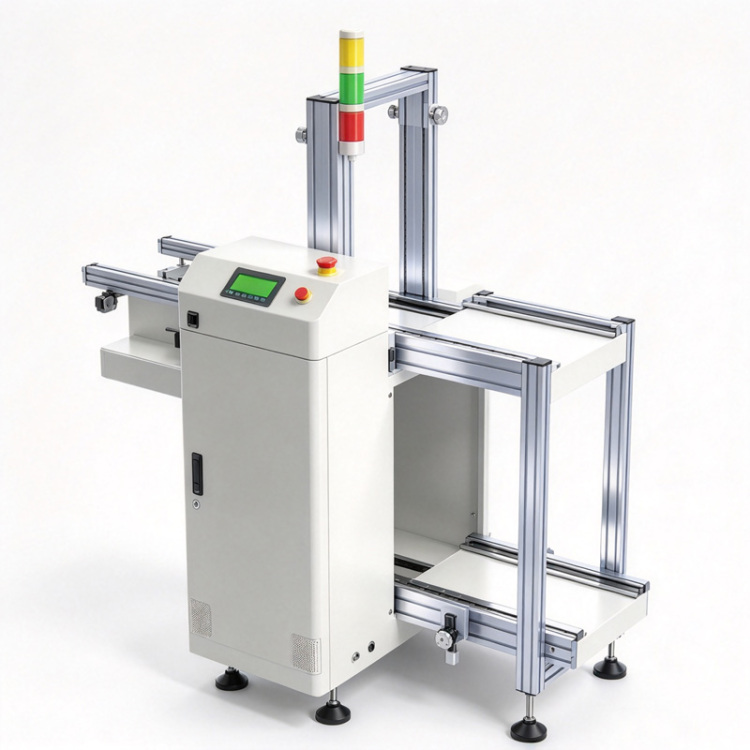
PCB unloaders are widely used after reflow ovens, AOI systems, testing equipment, conveyors, and other automated processes. They can collect boards for temporary storage, further inspection, packaging, or delivery to another production line.
A standard PCB unloader is suitable for general SMT applications. A PCB magazine unloader is preferred when boards must be organized inside magazines. A PCB bare board unloader is designed for bare PCB production and handling.
For high-volume factories, automatic unloading can reduce operator intervention and improve material flow between multiple processes. For factories with changing product models, customized solutions can support different board sizes, magazine types, line heights, and production layouts.
The equipment may also be connected to barcode systems or MES platforms when the factory needs to record board identity, production status, storage location, or process history.
Chapter 6: Maintenance and Daily Management
Even a high-quality PCB unloader requires regular maintenance. Operators should check the magazine condition, conveyor surface, sensors, guide rails, board alignment, and alarm records during daily inspections.
Dust and debris should be removed from board-contact areas. Sensors must remain clean and correctly positioned. Belts, cylinders, motors, and moving parts should be inspected according to the supplier’s maintenance schedule.
When a board is misaligned or a magazine cannot be positioned correctly, production should not continue by force. The operator should check the board specification, magazine condition, sensor signal, and communication status before restarting the machine.
Standard operating procedures should cover loading, magazine replacement, product changeover, emergency stops, alarm handling, and basic troubleshooting. Clear procedures reduce operating errors and make training new employees easier.
Conclusion
A PCB unloader may be located at the end of the SMT line, but its influence extends across the entire production process. It helps remove completed boards, maintain material flow, protect board quality, reduce repetitive labor, and connect different manufacturing stages.
The right equipment should be selected according to PCB specifications, magazine requirements, line speed, layout, communication functions, ESD conditions, and maintenance needs. When these factors are properly matched, an automatic PCB unloader becomes an important part of a stable and scalable manufacturing system.