
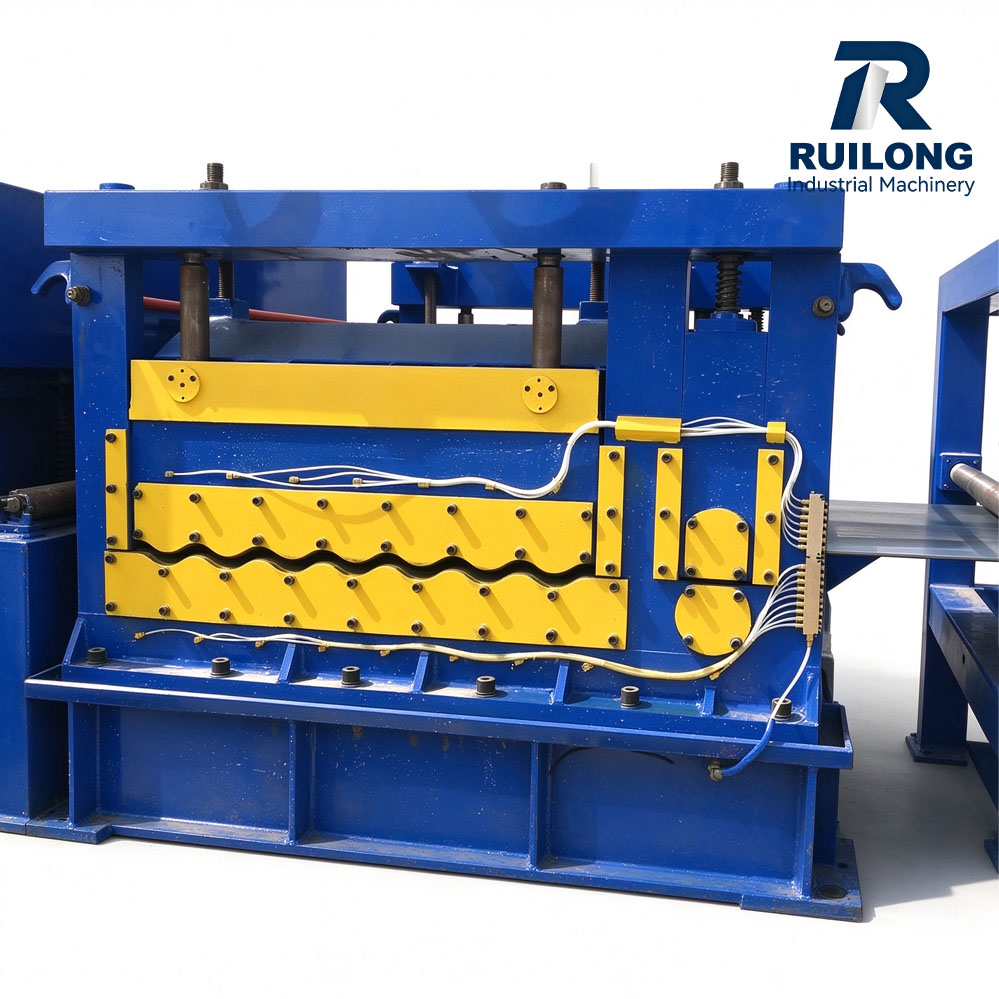
Buyers budget for the machine and forget the fortnight after it, then treat commissioning overrun as bad luck. It is not: how long does it take to install a cut to length line has a reproducible answer, a waterfall with two parallel tracks — civil works at home and manufacture at the factory abroad — that meet at the discharge gate. Below: the waterfall, what delays it, and what the engineers on your floor actually cost.
1. The Waterfall: Two Parallel Tracks Meeting at the Gate
The mechanical work on site is three weeks; everything around it is logistics and concrete. The sequence behind a realistic answer to how long does it take to install a cut to length line:
|
Week |
Track |
Activity |
|
W-14 to -12 |
Contract |
Design freeze, foundation drawings issued, utility list confirmed |
|
W-12 to -8 |
Civil |
Excavation, rebar, anchor bolts set on the builder's template, pour |
|
W-8 to -4 |
Civil + build |
28-day cure at home; fabrication abroad (90–150-day lead, see our contract-clauses article) |
|
W-4 to -2 |
Site prep |
Power connected, air line in, unloading equipment booked, crew assigned |
|
W0 |
Arrival |
Discharge per the loading plan, 24-hour thermal equalization, placement 2–3 days |
|
W1 |
Alignment |
Shimming to 0.05 mm/m level, centerline by piano wire, secondary grout, cure 3–5 days |
|
W2 |
Power-up |
Single-component trials: uncoiler, feed, leveler intermesh, shear stroke, stacker cycle |
|
W3 |
Strip |
Threading, first-piece tuning, operator training running in parallel |
|
W4 |
SAT |
The 30-sheet acceptance run from our FAT/SAT article; punch list; handover |
Three items own most of the historical slippage. Concrete cure compressed by "it looks dry" — grout cracks and alignment drifts, and the leveler never holds 0.05 mm/m. Power quality: a line this size wants a stable 60–100 kVA feed, and a plant that shares a dirty bus with welders spends commissioning week chasing drive faults. And the anchor bolt template: bolts set by eye pour a second foundation three millimeters off, and shifting a 20-tonne frame onto misplaced bolts costs a crane day — which is why Ruilong ships the machined template with the first shipment and asks for a bolt-position photo before the machine leaves the works. The site preparation checklist before machine arrival is short — foundation per drawing and cured, power and air live, unloading crane booked, 400–600 L of ISO VG 46 hydraulic oil on site, a crew of three fitters and one electrician assigned, floor space cleared for crate storage — and every row on it is cheaper checked at W-4 than discovered at W1.
2. What the Engineers on Your Floor Cost
The standard crew is two engineers — one mechanical, one electrical — for three to four weeks, and the bill is dominated by time, not rates. Budgeting installation engineer cost for imported cut to length line projects, the arithmetic that survives: day rate US1,500–2,500 per person round trip, lodging and local transport 20,000–30,000**, about 3–5% of the FOB figure on a mid-size line. Two rules keep it honest. The invitation letter and visa paperwork start six weeks before travel, not two — the most common four-week delay costs nothing to avoid. And the scope is written as days on site, with weather, customs and civil delays agreed as extendable at the same rates, so nobody renegotiates at W2 with the machine half-aligned.
What the buyer's team does during those weeks is decided in advance too: the electrician terminates cabinet-to-cabinet cabling under the engineer's direction at W1–2, and the future operators run the thread-ups from W3 — crews who watched commissioning from a folding chair take three months to own the line; crews who did it take three weeks. Ruilong writes a custom crew assignment into the installation plan alongside the timeline, because the cheapest commissioning weeks are the ones where your people are doing the work with ours standing behind them.
✅ Bottom line: Four to five weeks on site, US$20,000–30,000 for a two-engineer crew, and the schedule decided at the pour — cured concrete, clean power, bolts on template.
FAQ
Q: Can our own team install the line without the builder's engineers? A: For a light-gauge line with an experienced maintenance crew, partly — placement and power-up, yes. Alignment to 0.05 mm/m and the first-piece tuning are where imported-line self-installation most often ends in a re-visit, which is why installation engineer cost for imported cut to length line budgets at Ruilong read as insurance priced at 3–5% of FOB rather than as an optional extra.
Q: What delays commissioning most often in practice? A: In order: uncured or off-template foundations, power quality faults mistaken for drive faults, and late visa paperwork for the engineers. All three are checkable from your desk a month before the machine sails — Ruilong sends the gate checklist with the order confirmation so the W-4 audit is your audit, not ours.
Q: Is commissioning included in the quoted lead time? A: Usually not — lead time covers manufacture and shipment; the on-site weeks are a separate line with their own start trigger (machine discharged and utilities live). Get both dates in the contract, in writing, before the deposit: the site preparation checklist before machine arrival and the commissioning start clause protect the same boundary from opposite sides, and the clause discipline lives in our contract-clauses article.
Lock the Two Tracks Into One Schedule
Send Ruilong your site drawings and target production date. Tai'an Ruilong Machinery Co., Ltd. — the manufacturer behind the line, quoting supplier-direct from our works in China — returns the merged waterfall, foundation through commissioning, with the crew scope and the site-prep checklist attached, so the two tracks meet at the gate instead of arguing across it.